Understanding climate change and extremism in European politics
This project explores the relationships between climate change politics and (counter)extremism in a European context.
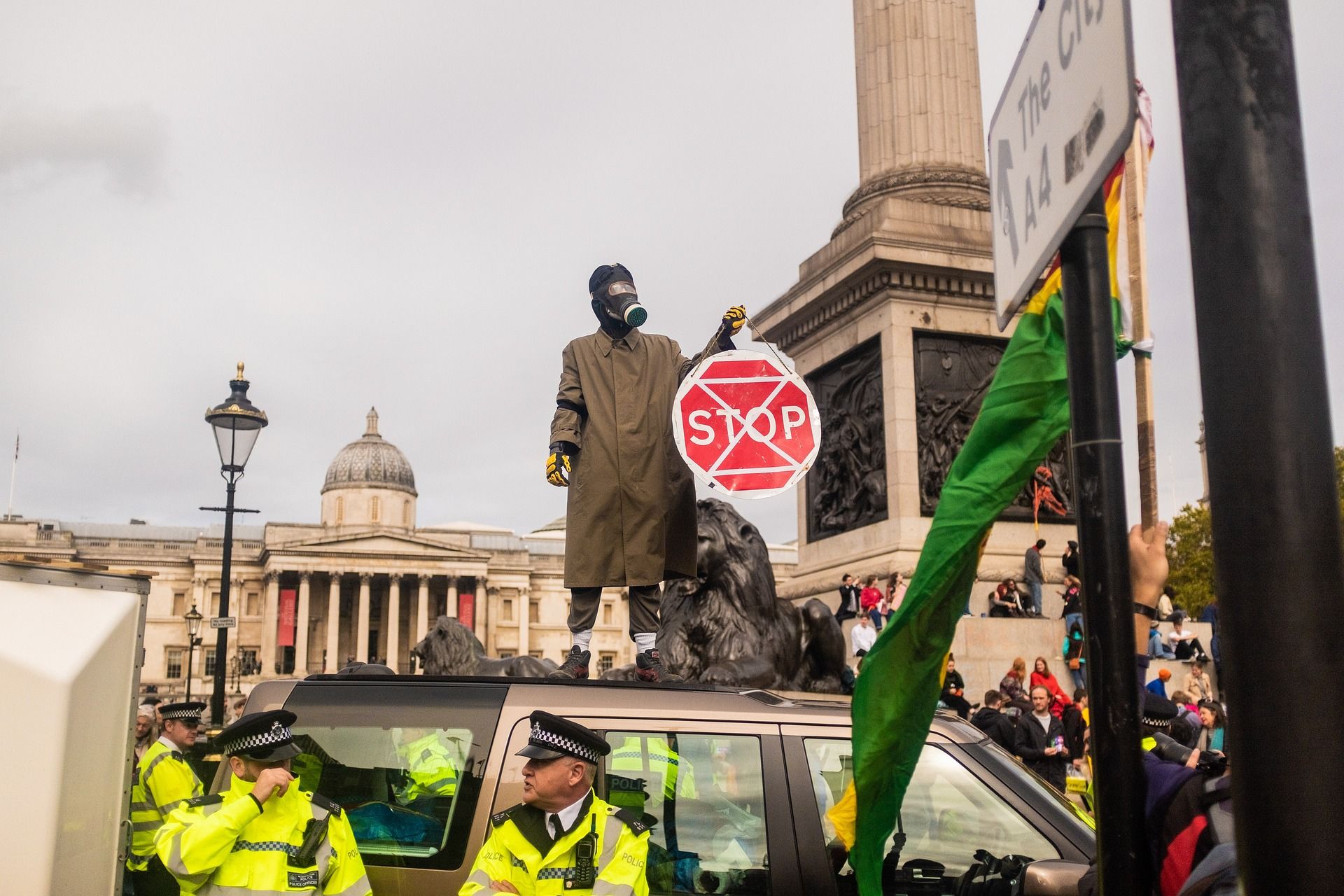
Many commentators, for example climate justice advocate Mary Robinson and former US President Barack Obama, have noted that climate change could carry increased risks of increasing radicalisation, extremism, and even terrorism. Climate activists calling for transformative action to respond to the climate emergency have also been repeatedly accused of ‘extremism’, ‘eco-extremism’ and labelled as ‘extremists’ and ‘terrorists’. This project explores this trend, tracing how the concepts of ‘extremism’ and ‘extremist’ are employed in the context of British climate politics. It has four key questions:
- How is extremism defined by different stakeholders in British climate politics?
- How does extremism relate to contemporary ideological divides in British climate politics?
- What does it mean for an individual, group or organisation to be labelled as ‘extremist’ and which kinds of political subjectivities follow from this?
- What role does climate change play in relation to counter-extremism, and related counter-terrorism, strategies and policies in a British context?