Hungary Votes: A Turning Point for Europe?
8 April 2026
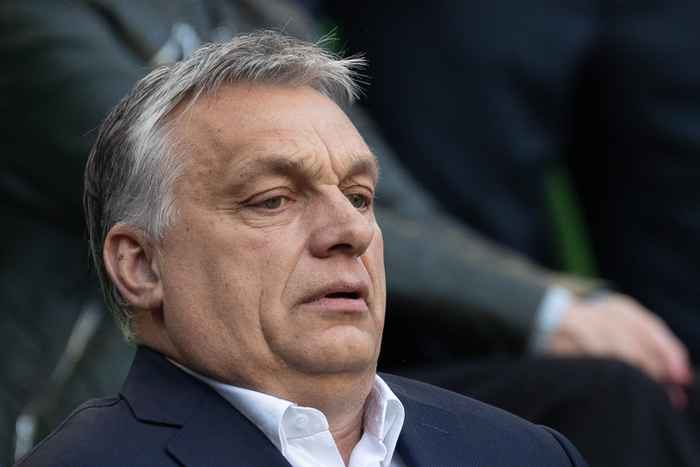
‘It is striking how much international attention these elections are getting for a relatively small country,’ says Lajosi. ‘But it undoubtedly has everything to do with the fact that the result will be decisive for the future. Not only for Hungary, but also for the European Union.’
For the past sixteen years Viktor Orbán and his party Fidesz have been in power. During those years, he has become a thorn in the side of the European Union: he blocked important decisions, maintained close ties with Russia and regularly opposed European policy. At the same time, the democratic rule of law was eroded and a large part of the media came into the hands of pro-government parties.
For a long time, Orbán seemed untouchable. The opposition barely managed to offer a convincing alternative. Four years ago, several parties joined forces, but even then Fidesz won by a wide margin.
New challenger
This time the contest looks closer. Péter Magyar, leader of the conservative Tisza Party, has been ahead in the polls for months. Even so, Lajosi warns against excessive optimism: ‘You win elections with votes, not with polls. It is certainly not inconceivable that Orbán will win again.’
Among voters who want change, there is a strong sense that it is now or never. A vote for Magyar is often above all a vote against Orbán. Substantively, the two candidates are not even extremely far apart, according to Lajosi: both are conservative right-wing, although Magyar presents himself as somewhat milder and is clearly pro-European, in contrast to Orbán.
In his campaign, Magyar emphasises the importance of Hungary’s EU membership. In his party manifesto he explicitly states that he wants to ‘choose Europe’ and calls for the restoration of trust with both the EU and NATO. In the longer term, he wants Hungary to adopt the euro by 2030 at the latest. In addition, he wants to recover the 18 billion euros in European funds that are currently frozen because of rule-of-law violations under Viktor Orbán. According to him, these are indispensable for the recovery of the Hungarian economy.
‘He also talks at length about the corruption that has increased significantly under Orbán,’ says Lajosi. ‘At the same time, he steers clear of other sensitive topics. For instance, he does not comment on Pride, which is banned in Hungary, or on the human rights of the LGBTQ community, which are under considerable pressure in Hungary. Magyar actually says very little about Ukraine as well.’

Dr Krisztina Lajosi is Programme Director of European Studies and Religious Studies. Krisztina is an Assistant Professor and Research Director in the Department of European Studies at the University of Amsterdam. Her expertise lies in nationalism and populism from a historical perspective, with a particular focus on Hungary, Central and Eastern Europe, as well as East–West relations in Europe. Her research focuses on the interactions between culture and politics, especially on how opera and music contribute to the formation of collective identities.
Influence of propaganda
Orbán opposes Magyar’s campaign with a narrative that he is the one who provides stability. ‘A familiar tactic is that he presents himself as the person who keeps the country from descending into chaos and protects Hungary from an external threat. At the moment, Ukraine is being used as a bogeyman and he claims that the country is a direct threat to Hungary.’
And that image sticks with many people. This is especially the case among older voters who are intensively reached through state media. According to Lajosi, the influence of propaganda is strong. ‘It is absolutely untrue, but you should not underestimate what a constant stream of misinformation does to people.’
The way campaigning is conducted raises questions about the fairness of the process. ‘It is not only a matter of domestic misinformation,’ says Lajosi. ‘There are also increasing signs of foreign interference.’
For example, a large Russian spy network is said to be active in Hungary, while European intelligence services are trying to intervene. ‘The country almost seems to be a testing ground for election interference. Add to that the fact that Orbán has redrawn the electoral districts to the advantage of Fidesz and that people abroad find it difficult to vote, and you may wonder how free these elections really are. I find it very worrying.’
High stakes for the future
The outcome on 12 April could have far-reaching consequences. ‘If Orbán wins, it is not inconceivable that Hungary will distance itself even further from the EU, possibly even moving towards an exit,’ Lajosi argues. ‘The European Union is increasingly fed up with having its decisions constantly obstructed by a single country. But within Hungary, too, the idea of leaving the EU is gaining ground. Some far-right groups openly advocate a break with Europe, which they see as a meddlesome, globalist power. In their view, the global centre of power is shifting and Europe is among the losers.’
The elections are therefore not only a national contest, but also a test for Europe’s future.